I may earn a commission at no extra cost to you. #ad
Free Guide: The Investor's Checklist for Authenticating Numismatic Collections
Jump to Section
- Introduction to Numismatic Authentication
- The Fundamentals of Visual Inspection
- Technical Verification: Weight and Dimensions
- Common Counterfeiting Techniques to Spot
- Third-Party Grading (TPG) Verification
- The Power of Provenance and Documentation
- Advanced Electronic and Chemical Testing
- Frequently Asked Questions
Introduction to Numismatic Authentication
In the world of gold investing, the distinction between a bullion coin and a numismatic masterpiece can mean thousands of dollars in premium value. However, with higher premiums comes higher risk. As global interest in tangible assets grows, so does the sophistication of counterfeiters. For the serious investor, learning the art and science of authentication is not just a hobby—it is a vital defensive strategy for wealth preservation.
Authentication is the process of verifying that a coin is genuine, has not been altered, and matches its claimed history and grade. This guide provides a systematic checklist designed to move you from a casual observer to a discerning investor capable of vetting high-value collections.
The Fundamentals of Visual Inspection
Your first line of defense is your eyes, aided by the right tools. A standard 10x jeweler’s loupe is the industry standard. Higher magnification often distorts the field of vision, while lower magnification misses critical details.
- Luster: Genuine gold coins exhibit a "cartwheel" effect when rotated under a single light source. This is caused by microscopic flow lines created during the high-pressure striking process. Fakes often appear dull or "soapy."
- The Fields: Check the flat areas (fields) of the coin for "pitting." Small holes or bumps often indicate a cast counterfeit rather than a struck genuine coin.
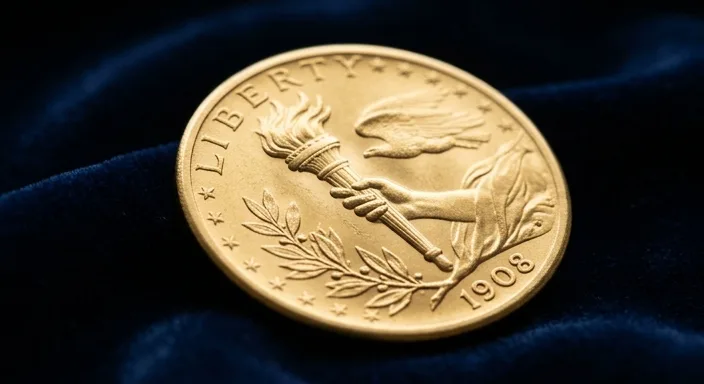
- Design Details: Compare the coin against a known genuine example or a high-resolution catalog. Look closely at the hair strands of Liberty, the feathers of an eagle, or the crispness of the date numbers.
Technical Verification: Weight and Dimensions
Counterfeiters often use tungsten or lead alloys to mimic gold. While they can get the weight close, they struggle to match both the weight and the volume simultaneously because gold is incredibly dense.
Every investor should own a digital scale accurate to 0.01 grams and a pair of digital calipers. A genuine 1-oz Gold American Eagle must weigh exactly 33.931 grams (it is 22k gold, containing 1 oz of pure gold plus alloy). If the weight is correct but the coin is noticeably thicker or wider than the official specifications, it is almost certainly a fake made of a less dense metal.
Common Counterfeiting Techniques to Spot
Modern fakes are no longer the crude "slugs" of the past. To protect your collection, you must understand how forgers operate:
- Transfer Dies: Forgers use genuine coins to create "transfer dies." While these fakes have correct designs, they often lack the "snap" and depth of a genuine strike. Look for "mushy" details.
- Added Mint Marks: A common coin can be turned into a rare "key date" by soldering on a mint mark (e.g., adding an 'S' to a 1909 VDB Lincoln Cent). Use your loupe to look for seams or discoloration around the mint mark.
- Altered Dates: Similar to added mint marks, numbers can be scraped or engraved to change the date. High-magnification inspection will usually reveal tool marks or inconsistent metal textures.
Third-Party Grading (TPG) Verification
For high-value numismatics, professional certification by the Professional Coin Grading Service (PCGS) or the Numismatic Guaranty Company (NGC) is the gold standard. However, the "slabs" (holders) themselves are now being counterfeited.
The TPG Checklist:
- Verify the Cert Number: Every graded coin has a unique certification number. Enter this on the PCGS or NGC website to see if the coin in their database matches the one in your hand.
- Examine the Hologram: Genuine slabs have high-quality security holograms on the reverse. Counterfeit slabs often have stickers that look "flat" or lack the color-shifting properties of the original.
- Check the Slab Seams: Genuine slabs are sonically sealed. Look for signs of "cracking and swapping," where a genuine holder is opened to insert a lower-quality or fake coin and then glued back together.
The Power of Provenance and Documentation
Authentication isn't just about the physical object; it's about the paper trail. Provenance—the history of ownership—adds a layer of security and value to a numismatic collection. If a coin was part of a famous auction (like the Eliasberg or Pogue collections), its authenticity is virtually guaranteed.
Always ask for original receipts, auction catalogs, or certificates of authenticity from reputable dealers. An investor should maintain a digital folder for every significant purchase, including high-resolution photos of the coin’s obverse, reverse, and edge.
Advanced Electronic and Chemical Testing
If you are dealing with unslabbed (raw) gold coins or bulk lots, you may need technology to assist your inspection:
Sigma Metalytics: This is the most popular tool for modern investors. It uses electromagnetic waves to verify the metal content through the surface of the coin without causing damage. It can even test coins through plastic slabs.
XRF (X-Ray Fluorescence): These handheld "guns" provide a chemical breakdown of the surface metal. While expensive, they are the final word in determining if a coin is 90% gold, 91.67% gold, or a gold-plated base metal.
Frequently Asked Questions
Does a "Ping Test" actually work for gold coins?
While gold has a distinct resonance, the "ping test" is generally discouraged for numismatic coins. Dropping or striking a rare coin to hear its ring can cause physical damage, significantly lowering its grade and value. Use electronic testers instead.
Can I clean a gold coin to see the details better?
NEVER clean a numismatic coin. Even a soft cloth can leave microscopic "hairline" scratches. Collectors and grading services prefer "original skin." Cleaning a coin can reduce its numismatic premium by 50% or more.
What is the most commonly faked gold coin?
The $20 Saint-Gaudens and $20 Liberty Head Double Eagles are frequently counterfeited because of their high gold content and popularity. Always exercise extra caution with these denominations.