I may earn a commission at no extra cost to you. #ad
Free Guide: How to Build a Diversified Portfolio of Physical Gold and Rare Coins
Jump to Section
- Understanding Bullion vs. Numismatics
- The Benefits of a Hybrid Portfolio Strategy
- Choosing the Right Asset Mix for Your Goals
- Grading and Authentication: Protecting Your Assets
- Liquidity Considerations in Precious Metals
- Storage and Security Best Practices
- Long-Term Rebalancing Tactics
- Frequently Asked Questions
In the world of hard asset investing, physical gold remains the ultimate hedge against inflation and economic instability. However, many investors make the mistake of putting all their "gold eggs" in one basket—often either 100% bullion bars or 100% rare collectible coins. A truly resilient portfolio requires a strategic blend of both.
Building a diversified portfolio of physical gold and rare coins (numismatics) allows you to capture the steady stability of the spot market while opening the door to the significant capital appreciation potential of the collector market. This guide will walk you through the nuances of constructing such a portfolio from the ground up.
Understanding Bullion vs. Numismatics
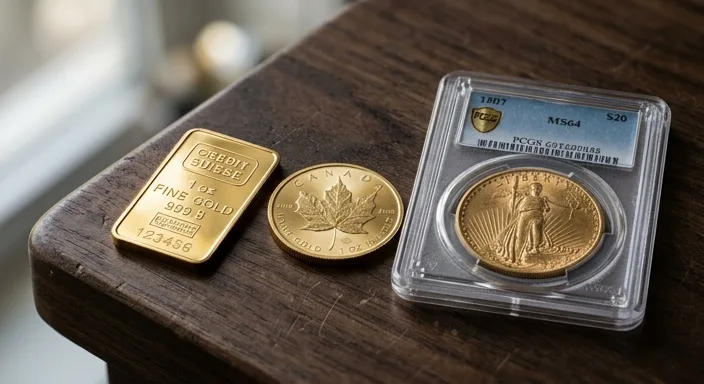
Before you start buying, you must understand the two primary categories of gold ownership. Gold bullion consists of items valued almost exclusively by their weight and purity. This includes modern gold bars, American Gold Eagles, South African Krugerrands, and Canadian Maple Leafs. Their value fluctuates in near-perfect lockstep with the global spot price of gold.
Rare coins (Numismatics), on the other hand, derive their value from factors beyond just gold content: scarcity, historical significance, minting errors, and condition (grade). While a bullion coin might trade for 3% over the spot price, a rare Pre-1933 $20 Saint-Gaudens Double Eagle in high grade might trade for 50%, 100%, or even 1,000% over its melt value. Understanding this "premium" is the key to diversification.
The Benefits of a Hybrid Portfolio Strategy
Why mix the two? The answer lies in market correlation. Bullion provides downside protection. If the economy tanks and the dollar weakens, gold prices typically rise. It is your insurance policy. However, bullion is a commodity; it rarely "outperforms" the gold market because it *is* the gold market.
Rare coins introduce asymmetric upside. Because the supply of rare coins is fixed (they aren't making any more 19th-century gold coins), a surge in demand from collectors can drive prices up even if the price of gold is stagnant. By holding both, you have a foundation of liquid wealth (bullion) and a "kicker" for significant growth (rare coins).
Choosing the Right Asset Mix for Your Goals
How much of each should you own? While every investor's situation is unique, a common "Golden Ratio" used by many experts is the 70/30 or 60/40 split:
- The Conservative Lean (70% Bullion / 30% Rare Coins): Focuses on wealth preservation and high liquidity. Best for those nearing retirement.
- The Growth Lean (50% Bullion / 50% Rare Coins): Best for long-term investors who can afford to wait for numismatic markets to mature.
- The Speculative Lean (30% Bullion / 70% Rare Coins): High-risk/high-reward. Requires deep knowledge of coin grading and market trends.
Beginners should generally start with a heavier bullion weight and gradually add numismatics as they become more educated on the nuances of the hobby.
Grading and Authentication: Protecting Your Assets
When you venture into rare coins, "condition is king." A single scratch invisible to the naked eye can mean a difference of thousands of dollars. To protect your investment, you should prioritize coins graded by reputable third-party services like PCGS (Professional Coin Grading Service) or NGC (Numismatic Guaranty Company).
These coins are "slabbed" in tamper-evident plastic holders with a verified grade (on a scale of 1 to 70). Grading provides three critical functions: it guarantees authenticity, establishes a standardized condition, and makes the coin significantly easier to resell (liquidate) in the future.
Liquidity Considerations in Precious Metals
Liquidity refers to how quickly you can turn your gold back into cash. Bullion is highly liquid; you can walk into almost any coin shop in the world and sell a 1oz Gold Eagle for cash instantly. Rare coins are "semi-liquid." While they are still gold, finding the right buyer who appreciates the rarity and is willing to pay the full premium might take longer.
When building your portfolio, ensure your bullion portion is large enough to cover emergency cash needs so you aren't forced to sell your rare coins at a "fire sale" price during a market dip.
Storage and Security Best Practices
A diversified portfolio represents significant value in a small physical footprint. Security is paramount. You have three primary options:
- Home Safes: Ensure you use a TL-rated (Torch and Levy resistant) safe bolted to the floor. Do not tell neighbors or friends about your holdings.
- Bank Safe Deposit Boxes: Secure, but offer no insurance and may be inaccessible during bank holidays or "bank runs."
- Private Depositories: Highly secure, insured facilities that specialize in precious metals. This is the gold standard for large portfolios.
Long-Term Rebalancing Tactics
Just like a stock portfolio, a gold portfolio should be rebalanced. If the price of gold spikes and your bullion now makes up 90% of your total value, it might be time to sell some bullion and "lock in" those gains by purchasing a high-quality rare coin. Conversely, if the numismatic market is overheated, you might trade a high-premium coin for a larger quantity of low-premium bullion.
Review your holdings annually. Track the "spread" between what you paid and the current market value. Building wealth in physical gold is a marathon, not a sprint.
Frequently Asked Questions
Should I buy gold bars or gold coins for my bullion stack?
Gold coins from major mints (like the Eagle or Maple Leaf) are generally preferred for individual investors because they are more recognizable, harder to counterfeit, and easier to sell than large bars.
What makes a coin "rare"?
Rarity is determined by the "mintage" (how many were made) and the "survival rate" (how many still exist today), particularly in high grades. A coin might have a mintage of millions, but if only 10 exist in "Mint State 67" condition, those 10 are extremely rare.
Are rare coins taxable?
In the US, gold is generally treated as a "collectible" for capital gains tax purposes. However, tax laws vary wildly by state and country. Always consult a tax professional regarding your physical asset gains.